Rhymed vs. Free Verse Moon Poems: How to Choose the Right Form
Every moon poem begins with a decision most writers make by accident: whether it rhymes. The moon is the most borrowed image in poetry, and it arrives carrying habits — moon and June, silver and river, the tidy couplet that closes a scene like a curtain. Rhyme can make a small poem feel finished and a large one feel smaller. Free verse can let a poem breathe and let it sprawl. Neither form is the honest choice by default. What matters is whether the shape of the sentence matches the shape of the night you are actually trying to describe.
Here is how to tell the difference before you spend an evening revising in the wrong direction.
What Rhyme Actually Does to a Moon Poem
Rhyme is a promise that something will come back. That is its real work, far more than decoration. When a line ends on light and the next stanza resolves it with night, the reader feels a small click of order, a sense that the world has been arranged. For a moon poem, this can be exactly right. Moonlight is cyclical; it returns, it wanes, it comes back. A rhyme scheme imitates that return in the ear.
Rhyme also remembers. It is an old form, and old forms carry the sound of ballads, lullabies, and hymns — all things people have sung at night. If your poem wants that registered, rhyme gives it to you without a word of explanation:
The moon has set her silver chair
behind the elms and left the lawn
to ordinary dark. The air
is what her going settles on.
The risk is that rhyme starts choosing your images for you. The moon/June problem is not that those words are bad; it is that they arrive as a pair, and once one is in place, the other is already leaning on the door. A rhymed moon poem has to earn every end word twice: once for sound, once for sense. If a line exists mainly to reach a rhyme, cut the line or change the scheme. Test each couplet by reading only the second line aloud — if it says nothing you did not already know, the rhyme is doing the writing.
Where Free Verse Earns Its Keep
Free verse is better at some things rhyme cannot do without strain: hesitation, interruption, a mind changing direction mid-thought. The moon at three in the morning is rarely orderly. It is a light on a ceiling, a phone face-down, a sound in the hall. Rhyme wants to settle that; free verse can let it stay unsettled.
The moon is a dish
the city forgot to clear.
It stays up there, going cold,
while every window keeps its own opinion.
Notice what free verse allows: a metaphor that is slightly wrong and therefore alive, a sentence that stops short, an ending that refuses to click shut. Line breaks replace rhyme as the main instrument. In free verse, the break is the rhythm — it is where you decide the reader pauses, and every break should either turn the meaning or deepen it.
Free verse fails when it becomes prose with wide margins. The usual symptom is lines that break only where the page runs out, so the poem could be reset as a paragraph without loss. If that is true of your draft, it is not yet a free verse poem; it is a note to yourself. Give it rhythm through repetition, through syntax, through a returning phrase, or let a few internal rhymes fall where they land.
Three Moonlit Subjects, Two Forms
The full moon over water
This subject has natural symmetry — reflection, doubling, return — and it rewards rhyme or a repeating refrain. A ballad stanza or a quietly rhymed quatrain lets the poem imitate the water's own pattern. Free verse can work here too, but it needs a strong counterweight: a hard, plain sentence against all that shimmer, or the poem becomes decorative.
The moon seen through a window at 3 a.m.
Insomnia is jagged and the mind jumps. Free verse suits it almost automatically. Long lines for the thoughts that will not stop, short lines for the moment you notice the room. If you want rhyme here, use it sparingly and let it break — a single couplet in an otherwise unrhymed poem can feel like a sudden, unwelcome clarity.
The moon behind cloud, or an eclipse
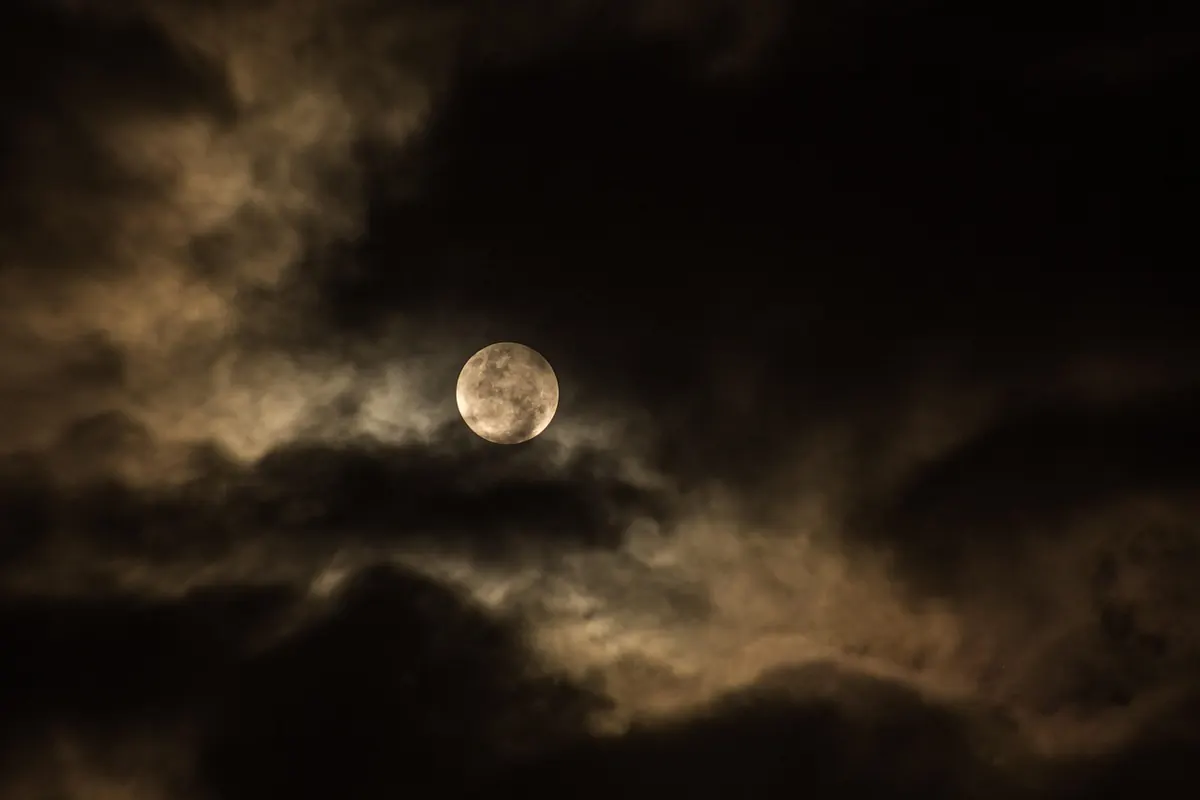
Anything about obscuring, partial visibility, or slowness suits a form that can withhold. Blank verse — unrhymed iambic pentameter — is a good middle path: it has a steady pulse and dignity without the closing click of rhyme, so the moon can stay hidden without the poem sounding unresolved in a fussy way.
A Short Test Before You Commit
Answer these honestly, in one line each, and pick the form the answers point to:
- Is my subject cyclical — waxing, tides, return, ritual? Rhyme is available to you.
- Is my subject a single moment of noticing? Free verse is probably stronger.
- Do I have three or four images that already rhyme in meaning, not just in sound? Then rhyme will feel inevitable rather than forced.
- Can I say my central sentence in plain prose without embarrassment? If not, no form will fix it.
- Does my draft have a line that exists only to reach an end word? Cut it and see whether the poem survives.
- Would I be willing to change the rhyme scheme mid-poem if the sense demanded it? If yes, you are ready for rhyme.
Hybrid Moves: Rhyme That Comes and Goes
You are not required to choose a side for the whole poem. Two reliable hybrids:
- Rhyme the ends of stanzas only. Let the middle lines run loose. The poem keeps a frame without every line straining toward the door.
- Use slant rhyme and refrain. Near-rhymes — moon / mine, light / late — satisfy the ear without the mechanical click, and a repeated line can do the structural work that a scheme would otherwise do.
A refrain is especially useful in moon poems, because the moon does repeat. Bring one line back three times, unchanged or slightly altered, and you have the emotional effect of rhyme with none of the padding.
Revising: What Each Form Asks You to Cut
Rhymed drafts usually need their adjectives removed. The pressure of meter and rhyme makes writers reach for silvery, luminous, gentle — words that fill a beat and say nothing. Read the poem with every adjective underlined and delete half of them; the rhyme will hold up better than you expect.
Free verse drafts usually need their explanations removed. The image is there; the sentence after it tells the reader what it means. Try ending the poem one or two lines earlier than feels comfortable. Moon poems very often end at the image, not at the conclusion drawn from it.
Choosing Your Form Tonight
Start with the occasion. If you are writing something to be read aloud, sung, or remembered by heart, lean rhymed — the ear holds it. If you are writing to get one specific night exactly right, lean free verse and trust the line breaks. If you are unsure, write the draft in free verse first: it is easier to add a scheme to a clear poem than to dig clarity out from under a bad one.
Then read it aloud once, in a dark room if you can manage it. Rhyme will announce itself; free verse will either find a pulse or flatten. Whichever form survives that reading is the right one for this poem. Keep the other draft in a folder — the same moon comes back next month, and the version that failed tonight may be the one that works in November.
Photo: betül nur akyürek / Pexels