Why the Moon Inspires Poetry: Folklore, Science, and the Pull of the Night
The moon is a calendar you can see without opening an app. It is a lamp that never quite reaches the ground. It is the one object in the night sky that most of us can name, find, and argue about. Poets return to it for the same reasons sailors once did: it is reliable, it is strange, and it keeps a rhythm that our lives rarely match.
That pull is not nostalgia. The moon offers a poet three kinds of material at once: story, fact, and feeling. Used together, they make a poem that can hold a whole night. Used carelessly, they make a greeting card. The difference is usually specificity.
The Moon Keeps Changing
No other common subject changes shape on a schedule. A mountain is a mountain. A rose opens and closes. The moon moves from a thin crescent to a full disc and back again, and it does so in plain view. That cycle is a ready-made structure for a poem. You can use the phases as a clock inside the lines: a waxing moon for anticipation, a full moon for exposure or completion, a waning moon for aftermath.
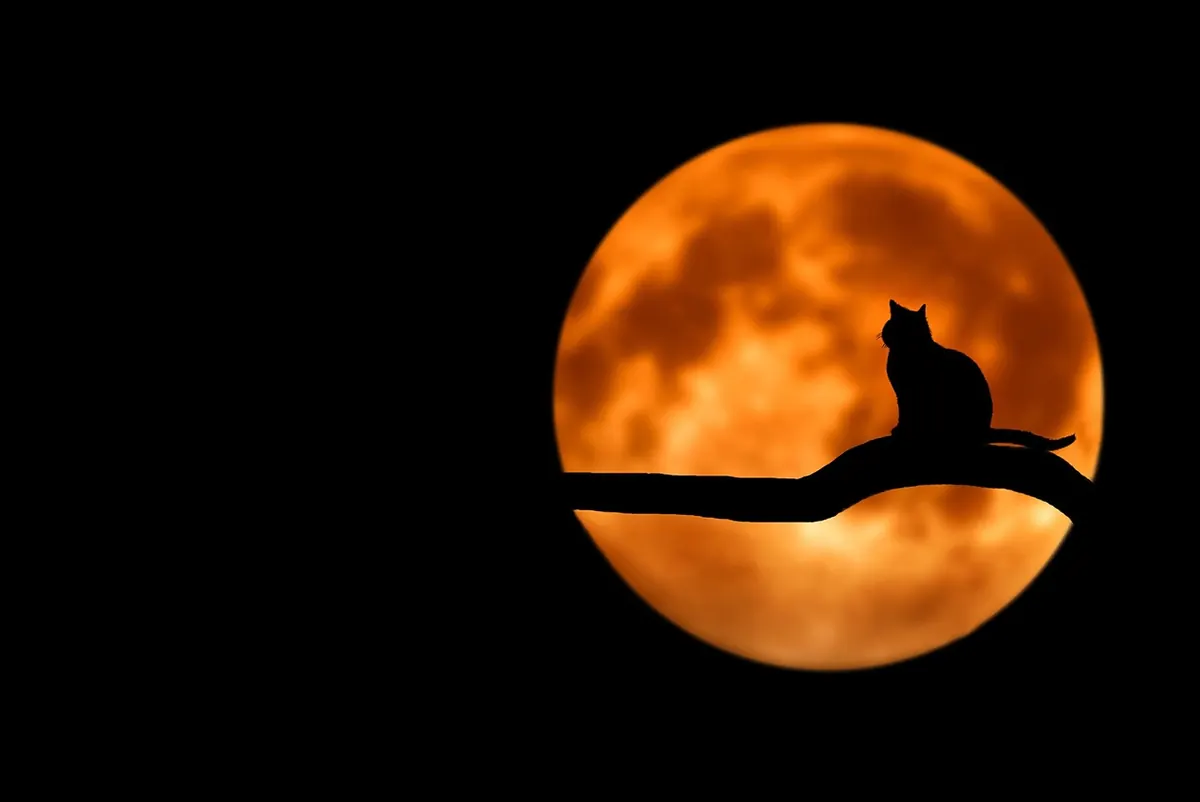
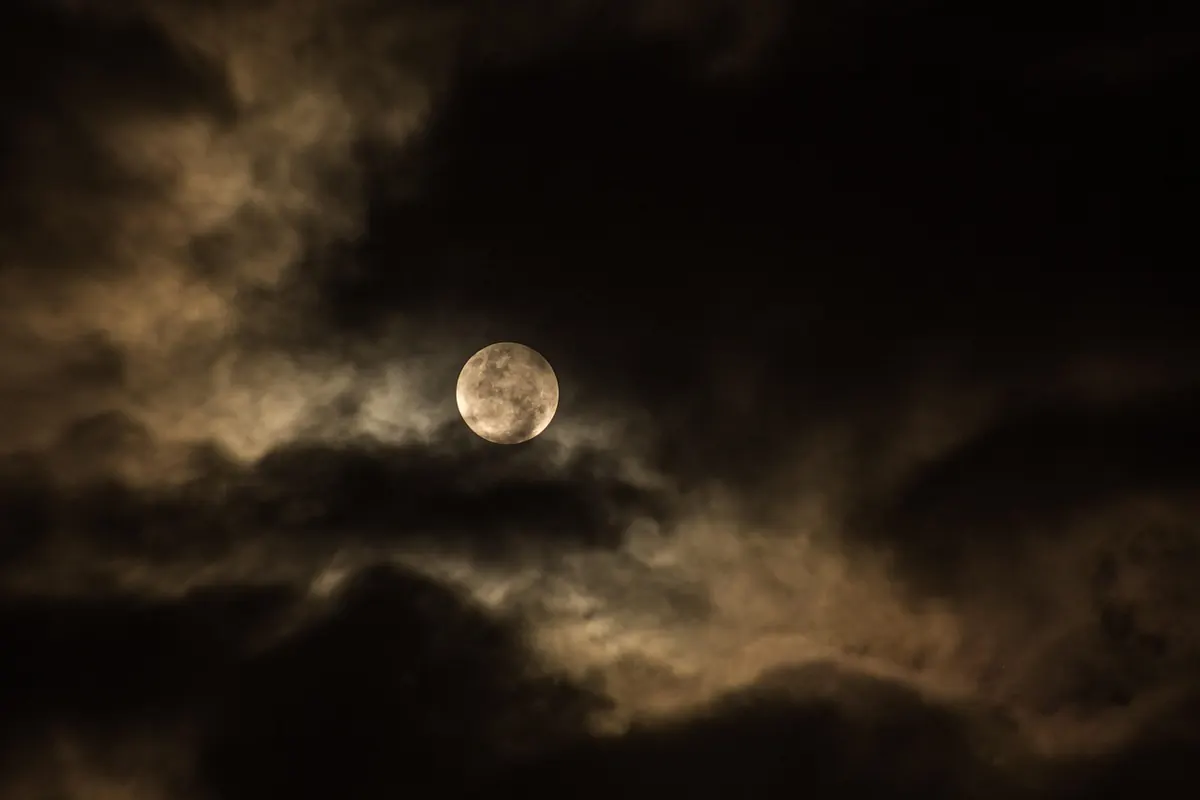
Be careful with the full moon. It is the easiest image and the most exhausted. If you want a full moon in a poem, give it a job. Let it light a specific room, embarrass a character, or keep someone awake. A full moon over a generic sea is wallpaper. A full moon reflected in a kitchen spoon is an image.
Phases also solve a common problem: how to show change without explaining it. Instead of writing “I changed,” you can write “the moon lost its edge above the garage.” The reader sees the change and feels the time pass. That is the moon doing structural work, not decoration.
Folklore Gives the Moon a Cast of Characters
Every culture that has looked up has told a story about what it saw. In European tradition, the dark marks on the moon became a man carrying sticks, or a face. In East Asian folklore, the marks became a rabbit pounding medicine. Greek myth gave the moon a goddess, Selene, who drove a chariot across the sky. These stories are not interchangeable, and they are not decorations to sprinkle on a poem. They are ways people have made the moon personal.
For a poet, folklore offers two useful moves. The first is personification: the moon can be a witness, a gossip, a landlord, a friend who never answers. The second is warning. Many moon stories are about trespass, longing, or punishment. That gives a poem stakes. A moon poem that only says the moon is beautiful has no stakes.
When You Borrow a Myth
Name it or twist it. If you use the rabbit, do not pretend you invented it. If you use Selene, decide whether you are honoring the old story or arguing with it. A borrowed myth should enter the poem with its baggage visible. Otherwise it becomes a costume.
Science Makes the Moon Stranger and More Precise
Science does not kill the moon’s poetry. It gives the poem better nouns. Moonlight is reflected sunlight. The moon has no atmosphere, so its sky is black even in daytime, and its surface keeps footprints because there is no wind or rain to erase them. Tides are driven mainly by the moon’s gravitational pull. The moon always shows the same face because its rotation and orbit are synchronized. These facts are not trivia; they are images waiting for a line.
Here are a few concrete details you can use without reaching for a textbook:
- Moonlight is borrowed light, which makes it a natural image for secondhand feeling or reflected glory.
- The moon’s surface is marked by craters and dust, so “clean” and “bright” are less interesting than “scratched” or “powdered.”
- The moon is about 384,400 kilometers away, a number that can become a measure of distance in a long-distance poem.
- Because the moon is tidally locked, it never shows us its back. That is a ready metaphor for what a relationship keeps hidden.
Use one fact, not five. A poem is not a lecture. The fact should do emotional work: if the moon keeps its back turned, the line should be about someone who does the same.
The Emotional Pull Is Not Mystical
The moon is a night object, and night is when many people feel most honest. Insomnia, loneliness, grief, and desire all get louder after dark. The moon is a companion in that hour because it is visible, quiet, and indifferent. It does not console, but it does not leave. That combination is useful to a poet.
The most common moon poem is about distance: two people under the same moon. It is a real feeling and a tired trope. To make it new, get specific. Which window? What hour? Is the moon a sliver or a smear behind clouds? Does the other person even look at it? A poem that admits “you are probably asleep” is stronger than one that insists on shared wonder.
Try writing about the moon as an object in a room rather than a symbol in the sky. The moon on a wet street. The moon in a glass of water. The moon caught in a blind. When you move the moon close, the feeling has somewhere to land.
Form: The Moon as a Constraint
Poets love the moon because it is regular without being boring. That regularity invites form. A haiku can hold a single moonlit moment. A sonnet can argue with the moon for fourteen lines and lose. A short lyric can repeat a phrase like a tide. The moon does not demand free verse, but it rewards pattern.
If you are stuck, borrow the moon’s own structure. Write a poem in phases: four short sections for new, waxing, full, and waning. Or write a poem that returns to the same line at the end, changed by what came before. The moon is a lesson in return.
Write Your Own Moon Poem Tonight
You do not need a special night or a rare mood. You need a window, a few minutes, and a willingness to be exact. Try this sequence:
- Go outside or look out a window. Write down three physical details you can actually see: the moon’s edge, the color of the sky, a reflection on a car roof.
- Choose a phase and a human situation. A waning crescent and a missed phone call. A full moon and a secret. A new moon and a beginning you are not ready for.
- Draft ten lines without rhyme. Let the moon appear at least twice, but not in every line.
- Replace one abstract word with an object. “Sadness” becomes “a cold cup.” “Hope” becomes “a chipped saucer.”
- Read the poem aloud. Cut the last line. It is usually an explanation, and the poem is better without it.
Keep the draft. The moon will come back around, and so will you. A poem written under one phase can be revised under another. That is not superstition; it is practice. The moon gives you a schedule for returning to the work.
Photo: Pexels / Pixabay