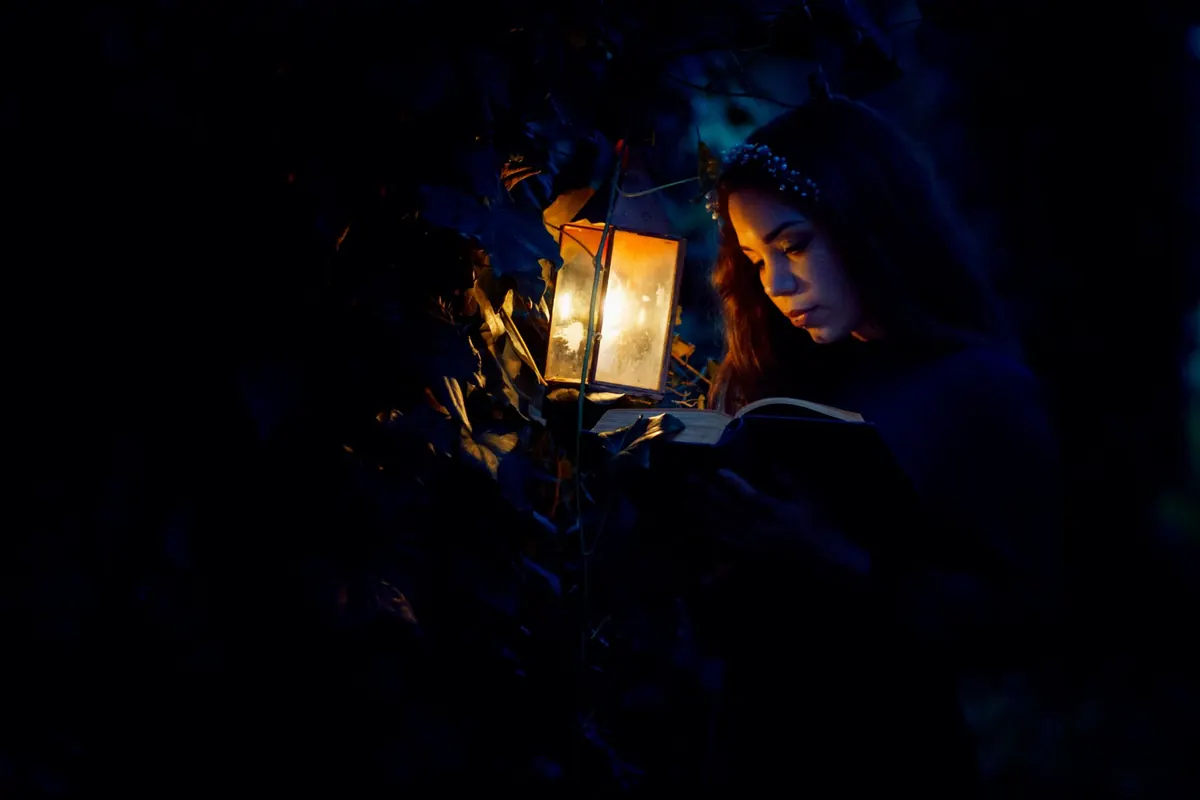
Moon Poems or Moon Short Stories? A Format Comparison for Night Writers
The moon arrives in a draft with unusual authority. It hangs there, pale and patient, and suddenly every sentence wants to be about distance, tide, memory, or someone standing at a window. That is useful, but it can also be misleading. A moonlit image is not yet a poem, and a moonlit premise is not yet a story. The real decision is not whether the moon belongs in the piece. It is whether the idea needs the compression of poetry or the forward motion of short fiction.
Both forms can hold the same material. A woman waiting for a letter, a town that loses its shadows, a couple arguing on a beach at midnight—these could become a lyric poem, a flash story, or a longer short story. The format changes what the reader notices first and what they are asked to do with the ending. Choose deliberately and the moon becomes structure, not decoration.
What the Idea Is Asking For
Before choosing a format, strip the idea down to its pressure. What is the central tension? Is it a feeling that refuses to resolve, or a situation that must change? Poetry tends to work when the tension is a chord held in the air. Short fiction tends to work when the tension has a before and after.
Try writing one sentence without the moon in it. “She cannot decide whether to forgive her brother.” “A man returns to a house he sold.” “Two strangers miss the last train.” If the sentence still has heat, you have a subject. If it collapses without the moon, you may have an atmosphere rather than a story—which is not a failure. It may simply be a poem.
Where Poetry Wins
Poetry is the better choice when the moon is doing more than setting a scene. It can carry contradiction without explaining it. A poem can hold “the moon was kind” and “the moon was a locked door” in the same breath, and the reader accepts both because the form is built for simultaneity.
Compression is its great advantage. In a poem, a single detail can do the work of a paragraph. A chipped teacup on a windowsill, a coat still warm from someone else’s back, the moon reflected in a puddle outside a laundromat—these are not props. They are arguments. The poem does not need to tell us what they mean; it needs to place them where meaning can gather.
Poetry also gives you silence. Line breaks, white space, and refrain let the reader pause. A short story can create pause too, but it usually does so through scene and summary. A poem can make the pause itself the event.
Signs a moon idea wants to be a poem
- The core of the idea is a feeling, image, or contradiction rather than a sequence of events.
- You keep returning to the same phrase or object, and it gains weight each time.
- The ending you imagine is a turn or a resonance, not a resolution.
- Dialogue feels unnecessary; the scene wants to be seen from one angle, closely.
- You are more interested in how the moon changes the language than in what the characters do next.
Forms to try: a short lyric, a prose poem, a haiku sequence, a sonnet with a volta, or a poem built from one repeated sentence. Do not choose a form because it looks literary. Choose it because it creates the kind of pressure your idea needs.
Where Short Fiction Wins
Short fiction is the better choice when the moon needs to alter a life. Stories are built on change, even small change. Someone wants something, meets an obstacle, and ends in a different relation to that want. The moon can be the obstacle, the deadline, the witness, or the lie that two people tell each other under its light.
Fiction gives you consequences. A poem can say, “She left before moonrise.” A story asks: why before moonrise, what did she take, who watched her go, and what does the empty chair mean at breakfast? Fiction also gives you bodies in space: hands, doorways, weather, money, the practical friction of being alive.
This does not mean every moon story needs a plot with gears. Flash fiction can be as compressed as a poem, but it still moves. A woman finds her father’s telescope pointed at a house that no longer exists. A night-shift baker sees the moon in the reflection of a bread knife and decides to call her sister. These are situations with a hinge. The reader waits for the turn.
Signs a moon idea wants to be a story
Choose fiction when your idea contains a relationship under strain, a decision, a secret, or a before-and-after. If you can answer “What changes by the last paragraph?” with something other than “nothing, but the reader feels differently,” fiction is probably the stronger container. If the answer is “a mood deepens,” poetry may serve you better.
The Hybrid Zone, and Its Traps
Prose poetry and flash fiction sit close together, and the border is often a matter of emphasis. A prose poem tends to privilege image, rhythm, and associative movement. Flash fiction tends to privilege situation, character, and a turn that feels earned by events. Both can use the moon beautifully; the trouble begins when a draft wants the freedom of a poem and the obligations of a story without committing to either.
Two common traps are worth naming. The first is the story that is only weather: lovely sentences, a moon, a lonely figure, but no pressure. The second is the poem that hides a plot: it keeps gesturing at things happening, but the language never concentrates enough to make the gestures matter. Ask what the reader should hold in their hands at the end. An image? A question? A changed character? A new understanding of a place? Decide, then revise toward it.
A Practical Test You Can Run in Twenty Minutes
Take one moon idea and draft it twice. First, write a poem of no more than fourteen lines. Do not rhyme unless the rhyme is doing real work. Focus on one image and one turn. Second, write a flash story of no more than five hundred words. Give one character a concrete want and let the moon interfere with it. Then read both aloud.
Listen for which version feels less explained. Poetry usually needs less explanation; fiction usually needs enough context for the change to land. If the poem feels padded, cut toward the image. If the story feels thin, add an obstacle. If both versions work, you have not made a mistake. You have found two ways into the same night.
Before committing, check three practical things: the ending you can actually write, the length you can sustain, and the reader experience you want. A poem asks the reader to dwell. A story asks the reader to follow. Neither is superior. The wrong format is simply the one that makes you add sentences you do not believe.
Choose the Form That Leaves a Shadow
If your moonlit idea is a knot of feeling, a repeated image, or a question that should stay open, write the poem. If it contains a person who must decide, confess, leave, return, or finally see someone clearly, write the story. When you are unsure, write the poem first. It will show you the essential image. Then write the story around that image and see whether it grows legs.
Keep both drafts. Night ideas change shape by morning, and a failed poem often becomes a story’s first scene. The moon is patient enough to wait for the right form.
Photo: Carolina Basi / Pexels