Seven-Day Moon Musings Journal: A Prompt Checklist for Nighttime Reflection
The moon keeps a schedule and asks nothing of you but that you look up. That is why it makes such a good writing companion: it arrives on time, it changes, and it never asks how the draft is going. A week of evening pages built around it gives you a small, repeatable ritual, roughly ten minutes a night, and enough raw material to fill a notebook margin or two.
What follows is a seven-night sequence. Each evening asks for three things: a few minutes of actual looking, a prompt to write against, and one line of verse to keep, cut or steal back later. No telescope required. A window facing the right direction helps, though your own front step is better.
Set the Terms Before the First Evening
Choose a time you can genuinely keep, and make it late enough that the sky is properly dark but early enough that you are not writing half-asleep. After the dishes. Before the last cup of tea. The exact hour matters less than the repetition.
Keep one notebook for the week and a pen clipped to it, stored wherever you will trip over it. Date every page, and note the time you went out and the weather, because in four days you will not remember whether Tuesday was clear. Aim for three sentences per prompt, not three paragraphs. The goal is not finished poems. The goal is material, and the moon is generous with it.
The Seven Evenings
Evening One — Name the Shape
Go out and describe the phase in your own words before you check a calendar. Is it a thin curve, a half, a swollen oval? During a single week the moon shifts shape noticeably and rises roughly fifty minutes later each night, so if you keep a fixed hour you will see it in a different place by Sunday. In the Northern Hemisphere the lit side of a waxing moon sits on the right; in the Southern Hemisphere, on the left.
Prompt: Tonight the moon is ______. Which part of my week is still growing, and which part has already been and gone?
Evening Two — Note the Company
Look at what sits near the moon. Its brightness drowns out faint stars, so notice which ones survive the glare and which vanish. If you want to see more, look slightly to the side of a star rather than straight at it, and let your eyes adjust for a full minute before deciding the sky is empty.
Prompt: Who stays close enough to be outshone by me? And whose light am I drowning out without meaning to?
Evening Three — Colour Near the Horizon
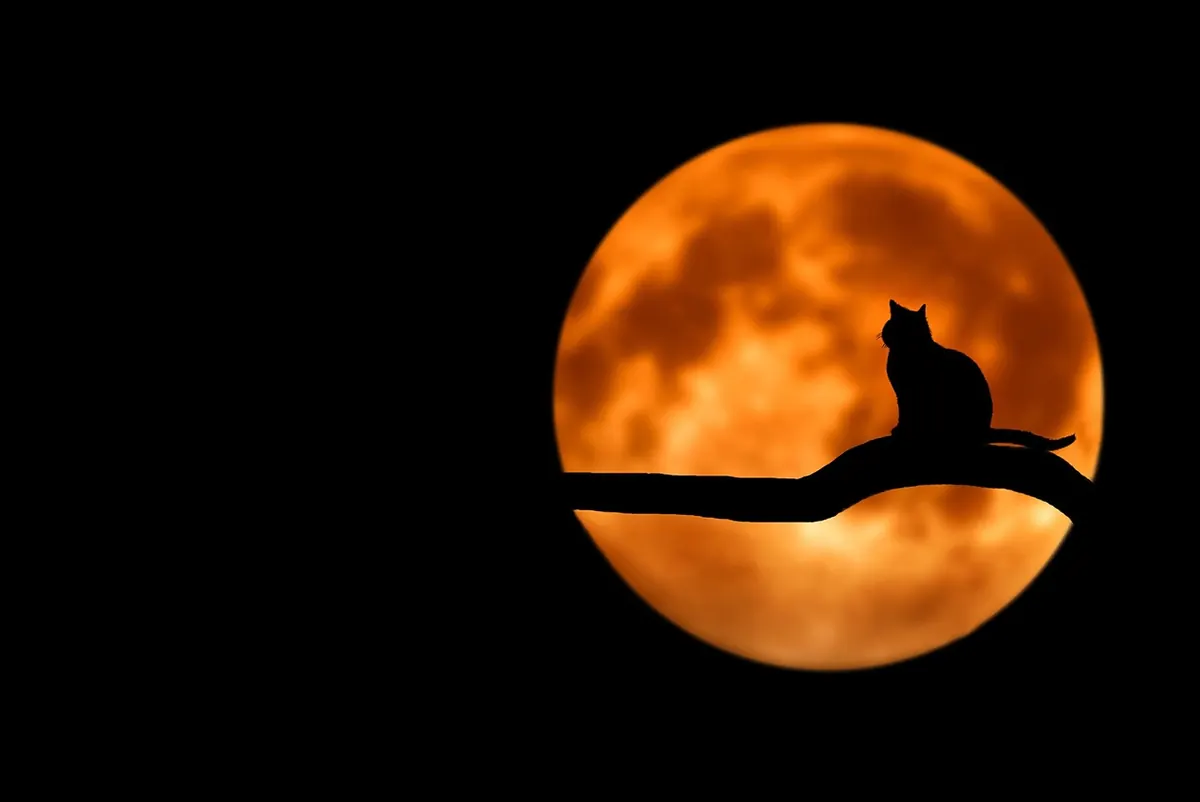
Catch the moon low, just after it clears the rooftops, and it will often look amber or rust-coloured. Higher up, it turns a harder white. Note the difference in one sentence, in your own vocabulary, without borrowing anyone else's adjectives.
The moon came up the colour of a peach and was cold by midnight.
Prompt: Where was I standing this week, and at what angle, when my own colour changed?
Evening Four — Watch It Move
Go out at your usual time, pick a fixed landmark such as a chimney or the fork of a tree, and mark where the moon sits against it. Go out again an hour later and mark it again. A quick pencil dot on a rough sketch of the roofline is enough.
Prompt: What moved in me this week while I was not watching?
Evening Five — Write the Line First
Tonight, invert the order. Write a single line of verse before you go outside, then look, then revise the line so it fits what you actually saw. Something honest and small will happen. You may write the moon is a coin, come back in, and change it to the moon is a coin somebody bit.
Prompt: Which of my images survived contact with the real thing, and which one did I keep out of habit?
Evening Six — Weather and Absence
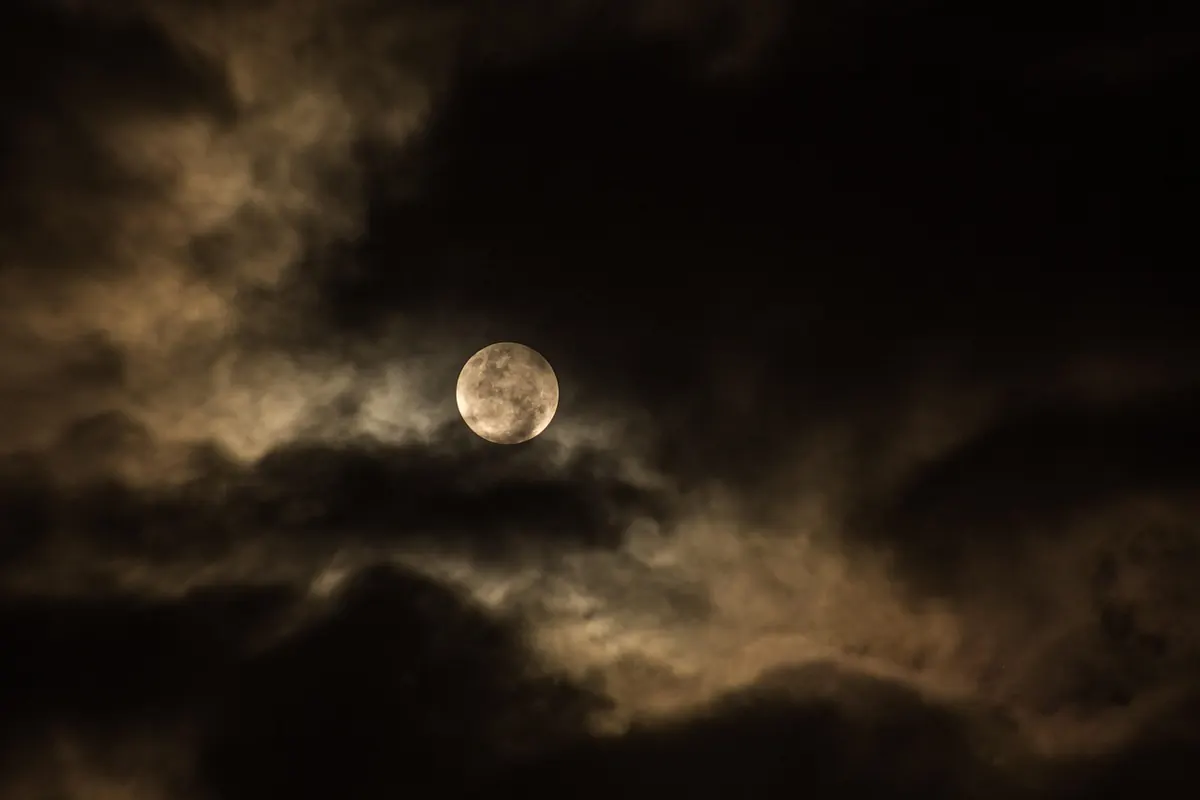
A cloudy night is not a wasted night. Go out anyway. Describe the brightness behind the cloud, the way a hidden moon still lights the edges of things, the colour of a wet street at ten o'clock. Write about what you cannot see.
Prompt: What do I miss most on nights when nothing is visible?
Evening Seven — Read the Week Back
Read all six pages in one sitting, preferably with the same pen in hand. Circle the words that recur. Cross out one line that flatters you. Choose a single line to carry into next week, and write it out cleanly at the top of a fresh page.
Prompt: In one sentence, what did the moon do this week, and what did I do?
A Checklist to Keep Beside the Bed
Copy this into the back of the notebook and tick what you have, rather than what you should have. Four ticks count as a good night.
- Date, time outside, and the phase described in your own words
- Where the moon sat in the sky and which direction you faced
- Weather: clear, hazy, half-covered, hopeless
- One thing you noticed with the naked eye
- The night's prompt answered in three sentences
- One poetic line, kept or deliberately cut
- One word for your mood before going out, one after
- A thirty-second sketch, if the mood takes you
When the Sky Refuses to Cooperate
A week of rain will happen, and it is worth deciding in advance what you will do rather than abandoning the practice. Write the prompt indoors from memory. Describe the last moon you clearly remember. Or set a reminder and try again the next night without making up the missed page; backfilling turns a ritual into homework.
If you want to watch the moon grow rather than shrink, begin two or three evenings after a new moon, when the first thin crescent appears in the west after sunset. Binoculars held steady against a doorframe will show craters along the bright edge, which is a fine thing to write about badly and then better. A cheap printed moon calendar pinned near the notebook saves you from guessing.
Make It a Habit, Not a Project
One week is a start, not a curriculum. The practice holds together if you keep the same ten minutes, the same notebook, and the same willingness to write something imperfect. Miss a night and resume the next; the moon will not scold you.
After a month you will have four pages of observation and a handful of lines worth keeping, which is roughly the yield of any good writing month. The sky does the changing. Your only job is to be at the window, pen already uncapped, before the light moves on.
Photo: Darkmoon_Art / Pixabay