Moon Imagery for Beginners: 20 Concrete Details Beyond Silver and Glow
Most beginner moon poems begin with a silver disc and end with a glow. The words are safe, but they do not show a reader anything they could not already imagine. A stronger poem begins with a question: what exactly is the moon doing tonight? Is it caught in a haze, sliding between rooftops, or laying a path across a puddle? This guide offers twenty concrete details—weather, landscapes, city nights, and small changes—that can replace the default adjectives. Copy them into a notebook. Change them. Combine them. The aim is not decoration but accuracy: a moon your reader can see.
Weather First: The Moon Is Never Alone
Weather gives the moon a body. Before you reach for an adjective, look at the air between you and the moon. Thin cloud, mist, rain, and cold all change its edge, its color, and the way light reaches the ground. Start a page called “moon weather” and collect what you actually see.
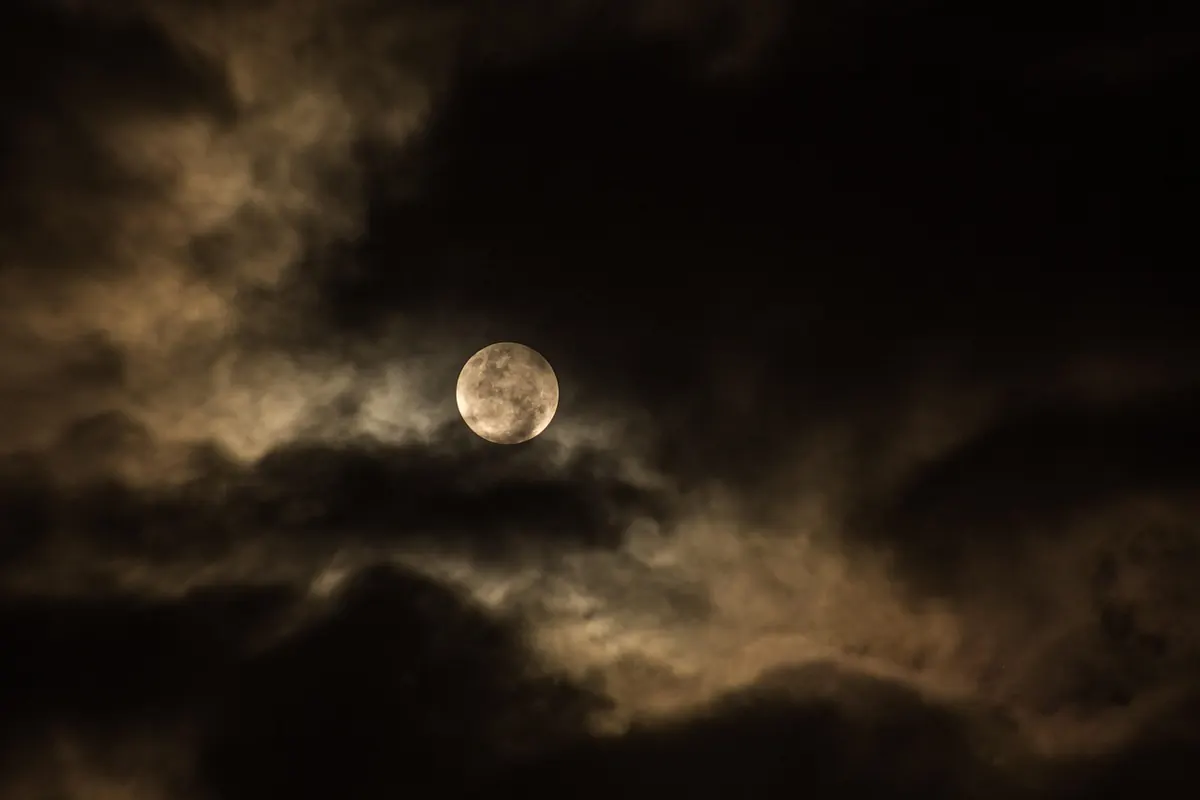
- A ring with a warm edge. When thin high cloud crosses the moon, a faint halo can appear, sometimes with a rust or straw-colored rim. Describe the ring’s width and whether it is complete.
- Cloud as torn paper. A cloud passing the moon shows its own texture: ragged, fibrous, or like a pulled thread. The moon does not glow through it so much as sit behind a moving screen.
- Mist on a field. In mist, the moon loses its sharp edge. A tree may hold a dim halo. The moon can look like a coin under water, but better to say what the mist does to the fence posts.
- Rain on glass. Through a rain-streaked window, the moon breaks into separate glints on the pane. Each drop makes a small lens. The moon is not one thing; it is several bright smears.
- Frost and breath. On a frosty night, light sits on fence tops and car roofs. Your breath clouds the view for a second. The moon seems harder and farther away, and the air has a grain to it.
Landscape: Where the Light Lands
The moon itself may be out of reach, but its light is not. Follow the light down. A good moon poem often spends more time on the ground than in the sky. Look at water, snow, stubble, stone, and the shadows between them.
- A path on moving water. On a lake or river, moonlight breaks into a path of small dashes. When the wind drops, the dashes join. When a boat passes, the path becomes a scatter of white pins.
- Branch shadows on snow. Bare branches throw a net of shadows across snow. The moon may be visible only as the gaps in the net. Write down the shape of the net, not the word “silver.”
- Stubble in a cut field. Over a harvested field, light catches stubble and makes a low, bristling texture. The ground looks rough and close. The moon looks higher because the field is dark.
- A ridge line. Watch the moon clear a hill. First it is a sliver above the ridge, then a half disc, then free. The ridge keeps a thin bright edge for a few minutes after the moon has risen.
- Puddles and ruts. On a dirt road, moonlight picks out ruts, stones, and the wet shine of a puddle. A puddle holds a white spot no bigger than a thumbnail. Step closer and the spot trembles.
City Nights: The Moon Among Buildings
City poems often make the moon a lonely symbol. That is too easy. Put the moon to work among antennas, windows, streetlamps, and laundry. The city gives you edges, interruptions, and competition for light.
- The slot between roofs. The moon appears in the narrow gap between two buildings, then slides behind an antenna. Note how long it stays in the gap. Note what part of the roof cuts it.
- A second moon in a window. A high window can hold a small copy of the moon. It trembles when a bus passes. The copy is dimmer than the moon and moves when you move.
- Streetlamp competition. Near a streetlamp, the moon looks dimmer and smaller. The lamp makes its own halo. The moon becomes a pale disc in a sky that is not quite dark.
- Balcony objects. On a balcony, moonlight catches a laundry line, a chair back, a plate left out. Ordinary objects become edges. The moon is not in the poem directly; it is in the shine on the plate.
- A plane crossing. A plane crosses the moon’s face as a blinking dash. Later, a contrail can turn the moon into a smear. Write the time, the direction, and what the moon looked like afterward.
Time and Motion: What Changes in Ten Minutes
A moon poem can be a still life, but it is stronger when it admits time. The moon moves. Clouds move faster. Reflections change with a breath of wind. Set a timer for ten minutes and write down what is different at the end.
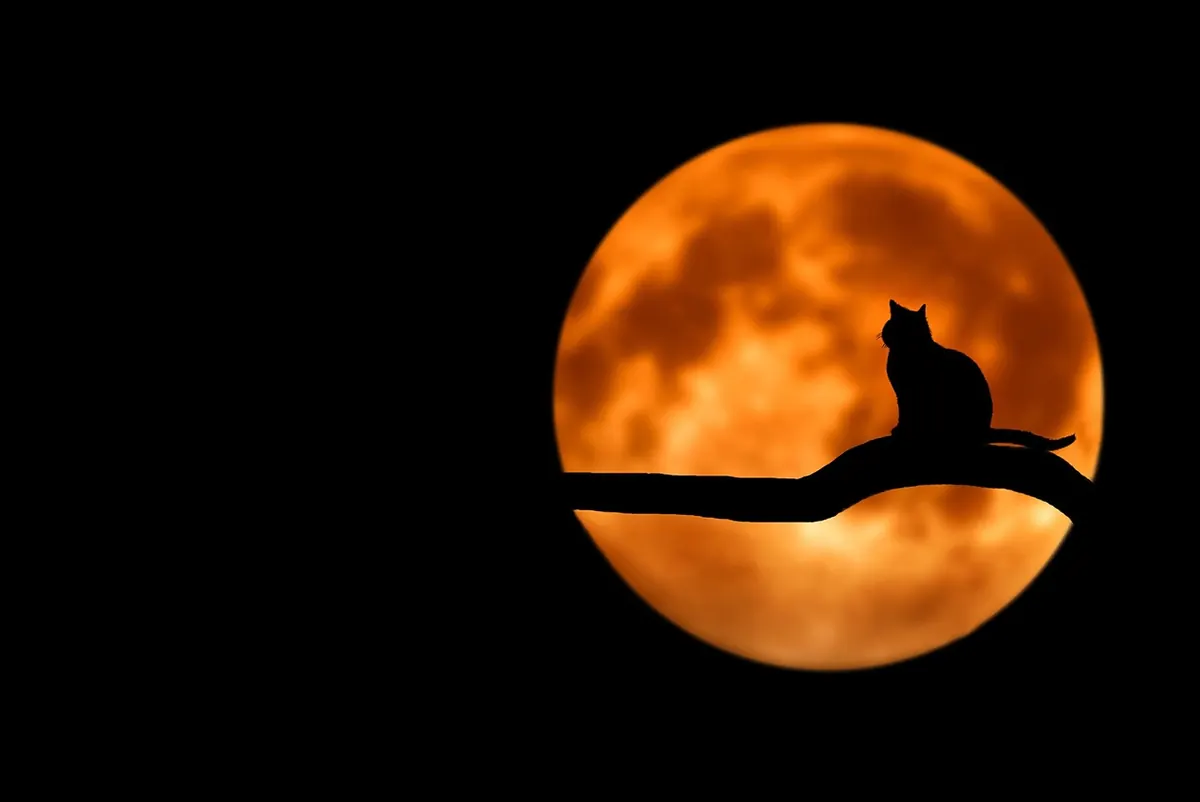
- Color near the horizon. A low moon is often amber or orange; as it rises, it pales. Describe the color against a specific roof or tree, not against “the sky.”
- The moon against fast cloud. When cloud moves quickly, the moon seems to race backward. It is the cloud that moves, but the eye records the illusion. Use that illusion in a line.
- The gap to a chimney. Pick a fixed object—a chimney, a pole, a branch. Note the moon’s position against it. In ten minutes, the gap will be different. That gap is a detail no adjective can replace.
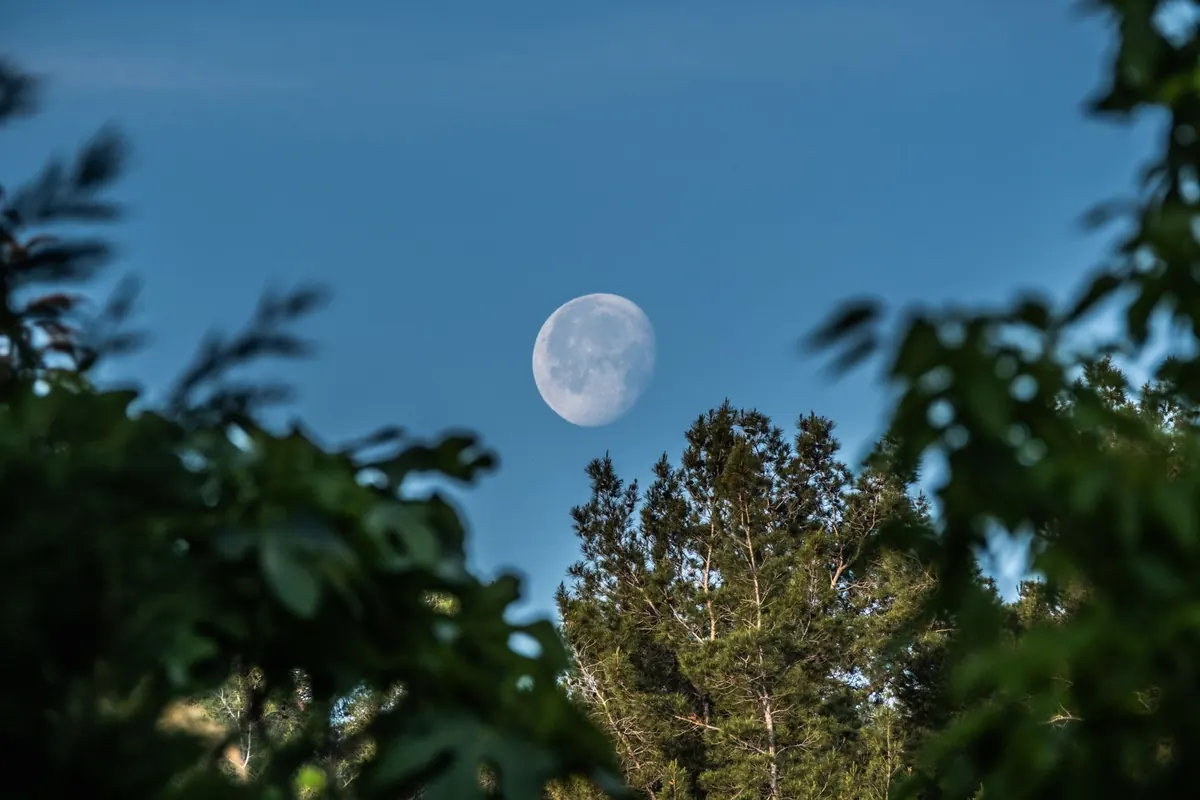
- Flicker through leaves. Through moving leaves, the moon flickers. Each leaf edge cuts it into pieces. The moon becomes a broken light on a wall, a shifting pattern on a sleeve.
- A reflection in a puddle. In a puddle, the moon’s reflection shivers with each ripple. Step closer and it sharpens. Step back and it loosens. The image changes with your body, not just the sky.