How to Read a Moon Poem Aloud: A Beginner’s Guide to Pace, Pause, and Tone
There is a particular sound a moon poem makes when it is read well: unhurried, a little plain, with air around the words. Not a whisper. Whispering reads as fake on a stage and disappears on a recording. Not a chant, either, and not the singsong that makes every line curl upward at the end like a question.
Most readers who think they are bad at this are doing one of three things. They run out of breath halfway through a line. They fill every line break with a dramatic pause until the poem sounds like a list. Or they apply a soft, reverent "moonlight" tone to the whole thing before the poem has earned it. All three are fixable in an afternoon, with a pencil.
What follows is a working method rather than a theory of verse. Pick one moon poem you love, print it on paper, and work through the steps with the page in front of you.
Before You Open Your Mouth
Read the poem silently twice. Once for meaning, once for the places where your eye trips — an odd word order, a long clause, a line that seems to arrive early. That stumble is information. If it caught you on the page, it will catch a listener in the air, and you can prepare for it instead of being surprised by it.
Then set yourself up properly. Stand if you can, or sit forward with both feet on the floor. Hold the page at chest height rather than down at your lap, so your chin stays level and your throat stays open. If you are reading to one other person in a small room, you still want to aim your voice at the far wall; the person in front of you will hear it just fine, and the voice will have somewhere to go.
A short checklist before you begin:
- Print the poem in a large, generous font, double-spaced. Cramped text makes cramped reading.
- Know the last line. Decide, before you start, how the poem ends and how you want to arrive there.
- Clear your throat and take two slow breaths out, not in. Most people start with too much air, not too little.
- Say the title out loud, then wait a beat. The title is the door; don't step through it in the same breath.
Breath Is the Real Meter
You cannot control pace if you cannot control breath, and you cannot control breath while you are still discovering the poem. This is why the first read-through on your feet matters more than any amount of silent study.
The rule of thumb is simple: speak to the end of your air, then take the breath during a pause rather than before one. If you breathe first and then speak, you will gulp. If you speak and then breathe into the silence that was already there, nobody hears you do it.
Marking the Copy
Take a pencil and mark the page. Use a single slash for a quiet breath, a double slash for a full stop, and an underline under the one or two words in each line that carry the weight. You are not annotating for a class; you are building a map you can follow while your attention is on the sound.
If a line is longer than your comfortable breath, don't force it. Find the seam inside the syntax — usually before a preposition or a conjunction — and breathe there, softly, so the sentence continues but the air is renewed. A line like and the moon comes in like a guest who has forgotten what he came for will not survive being pushed out in one lungful. Break it after in, and it sounds like a thought rather than a recitation.
Volume eats air. If you keep running out, you are probably speaking too loudly and too fast at the same time. Pull the volume back by a notch and the breath will last noticeably longer.
The Line Break Is a Door, Not a Wall
This is where most readings go wrong. The end of a line in a poem is not the end of a sentence, and it is almost never a full stop. It is a small hesitation — the time it takes to think the word and — and nothing more, unless the punctuation says otherwise.
Try these three invented lines both ways:
The window stays open. / The moon comes in / like a guest who has forgotten / what he came for.
Read it with a hard stop after every slash and you get four separate statements that have nothing to do with each other. Read it with a half-beat and the sentence holds together, while the hesitations land like small decisions. The meaning lives in that suspension, and you are the one holding it up.
Two habits to break. First, don't lift your pitch at the end of a line. That upward curl is the single most common tic in amateur poetry reading, and it turns reflection into announcement. Let the last word of the line stay level or fall slightly. Second, don't obey every comma as though it were a wall. A comma is a lean, not a stop.
Find the Weather, Then Underplay It
Before you decide how a poem should sound, decide who is speaking and to whom. A poem addressed to a lover in the same room is a different animal from a poem addressed to someone who is gone, or to the moon itself, or to nobody at all. Get that relationship straight and the tone mostly takes care of itself.
Moon poems attract reverence, and reverence is a trap. The most reliable technique is to read at about seventy percent of the intensity you feel. The listener supplies the rest. If the poem has one line that should ring out, save your volume for that line and keep everything else conversational. A reading with one loud moment is moving; a reading that is loud throughout is just noise with a nice vocabulary.
Three Experiments Worth Trying
Read the whole poem three times in a row, deliberately wrong. Once completely flat, as though reading a weather report. Once impatient and slightly annoyed. Once amused. You are not aiming for any of these; you are loosening your grip on the one tone you assumed was correct. Most poems improve after this exercise, because the voice stops performing and starts speaking.
Pace: Slow Down Where It Costs You Something
Speed up through description and lists, where the poem is covering ground. Slow down on concrete nouns, on the turn in the middle, and on the final two lines. End slower than feels natural — nearly everyone finishes too fast, because finishing is a relief.
Let the connectives move. Words like and, but, so, then are the joints of the sentence, not the bones. Linger on window, silver, cold, asleep; hurry through the small words that hold them together.
And when the last line is finished, hold the silence for two full seconds before you speak again or leave the room. The pause is part of the poem. Cutting it off is like switching off a lamp mid-sentence.
Practice That Actually Changes Anything
- Record yourself on your phone. Listen back three separate times — once only for breath, once only for pace, once only for tone. Never all three at once, or you will hear nothing but your own discomfort.
- Read to one person rather than a room. A single listener keeps you honest.
- Learn the first two lines by heart so your eyes can leave the page at the beginning. Starting from memory sets the voice free for everything that follows.
- Read the same poem on four different days. By the fourth, the mechanics will have dropped away and you will hear what you actually think of it.
A Five-Minute Warm-Up Before You Read
Use this in the minutes before a reading, or simply before you press record.
- Breathe out slowly three times, letting the inhale happen by itself.
- Hum one low, comfortable note for about twenty seconds. It loosens the jaw and lips better than any stretch.
- Read the first stanza at half speed, deliberately too slow. You are calibrating, not performing.
- Read the final line four times, each one a little softer, until the quietest version still reaches the back of the room.
- Say your own name and the poem's title aloud in the exact voice you plan to use for the poem. That is your setting, and it is easier to keep than to find mid-read.
The aim is not a performance that shows off what you can do with a poem. It is simply to make the poem audible, with enough room around the words for a listener to enter. If someone forgets that a person was reading and hears only the moon coming in through the window, you have done it right.
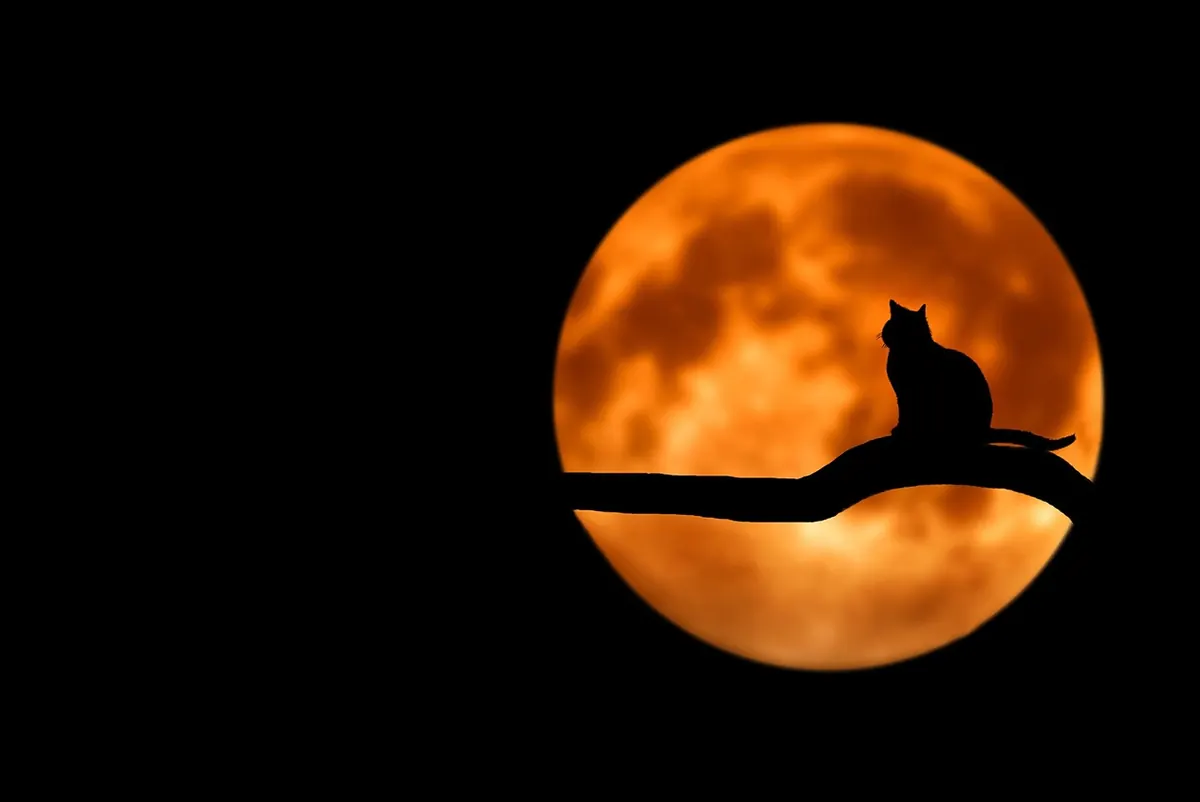
Photo: dassel / Pixabay